
The purpose of the Annual Morehead State University Celebration of Student Scholarship is to share and showcase the outstanding scholarly work of students involved in the Undergraduate Research Fellowship Program to the greater campus community. Initiated in the Spring of 2006, the annual celebration has grown into a day-long event of presentations, exhibitions, and performances by students from all colleges including Business and Technology, Education, Arts, Humanities, and Social Sciences, and Science.
Metadata by Kaitlyn P'Simer.


-
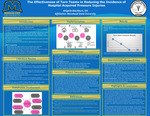
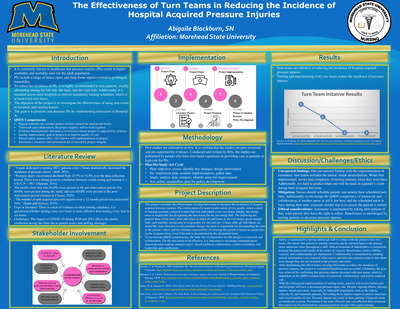
The Effectiveness of Turn Teams in Reducing the Incidence of Hospital Acquired Pressure Injuries
Abigaile Blackburn
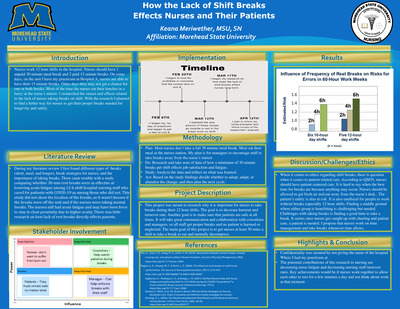
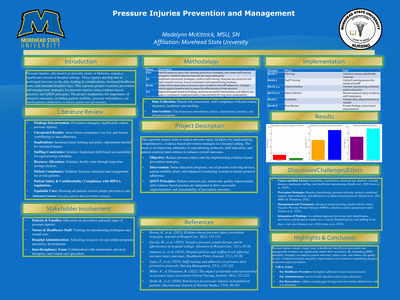
It is commonly known in healthcare that pressure injuries (PIs) result in higher morbidity and mortality rates for the adult population. PIs include a range of intact, open, and deep tissue injuries related to prolonged immobility. To reduce the incidence of PIs, it is highly recommended to turn patients, usually alternating among the left side, the back, and the right side. Additionally, it is standard across most hospitals to enforce mandatory turning schedules, which is at least every two hours. The objective of the project is to investigate the effectiveness of using turn teams in hospitals and nursing homes. The goal is to promote and decrease PIs by implementing turn teams in Hospital A. QSEN Competencies Patient-centered care: ensures project revolves around the patient and family Teamwork and collaboration: the project requires staff to work together Evidence-based practice: literature is reviewed to ensure project is supported by evidence Quality improvement: goal of project is to improve quality of care Patient safety: patient safety will improve with implementation of project Informatics: resources and information are reviewed for project integrity
-
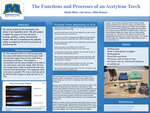
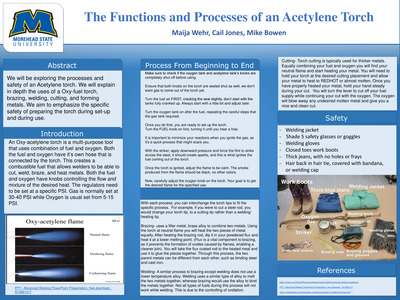
The Functions and Processes of an Acetylene Torch
Mike Bowen, Cail Jones, and Maija Wehr
We will be exploring the processes and safety of an Acetylene torch. We will explain in depth the uses of a Oxy-fuel torch, brazing, welding, cutting, and forming metals. We aim to emphasize the specific safety of preparing the torch during set-up and during use. An Oxy-acetylene torch is a multi-purpose tool that uses combination of fuel and oxygen. Both the fuel and oxygen have it’s own hose that is connected by the torch. This creates a combustible fuel that allows welders to be able to cut, weld, braze, and heat metals. Both the fuel and oxygen have knobs controlling the flow and mixture of the desired heat. The regulators need to be set at a specific PSI. Gas is normally set at 30-40 PSI while Oxygen is usual set from 5-15 PSI.
-
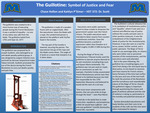
The Guillotine: Symbol of Justice and Fear
Chase Hollon, Kaitlyn P'Simer, and Alana Scott
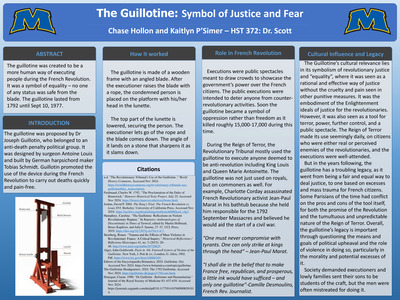
The guillotine was created to be a more human way of executing people during the French Revolution. It was a symbol of equality – no one of any status was safe from the blade. The guillotine lasted from 1792 until Sept 10, 1977. The guillotine was proposed by Dr Joseph Guillotin, who belonged to an anti-death penalty political group. It was designed by surgeon Antoine Louis and built by German harpsichord maker Tobias Schmidt. Guillotin promoted the use of the device during the French Revolution to carry out deaths quickly and pain-free.
-
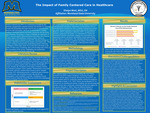
The Impact of Family Centered Care in Healthcare
Shalyn West
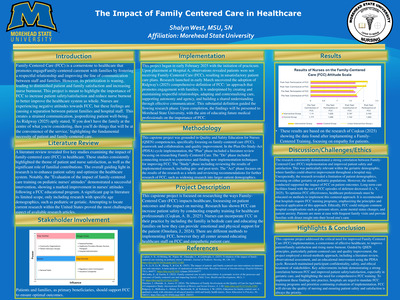
Family-Centered Care (FCC) is a cornerstone to healthcare that promotes engageFamily-centered carement with families by fostering a respectful relationship and improving the line of communication between staff and families. However, its prioritzation is waning, leading to diminished patient and family satisfaction and increasing nurse burnnout. This project is meant to highlight the importance of FCC to increase patient safety/satisfaction and reduce nurse burnout to better improve the healthcare system as whole. Nurses are experiencing negative attitudes towards FCC, but these feelings are causing a separation between patient families and hospital staff. This creates a strained communication, jeopordizing patient well-being. As Ridgway (2025) aptly stated, 'If you don't have the family at the centre of what you're considering, then you'll do things that will be at the convenience of the service,' highlighting the fundamental necessity of patient and family-centered care.
-
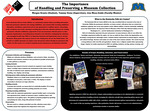
The Importance of Handling and Preserving a Museum Collection
Morgan Krantz, Tammy Stone, and Lisa Mesa-Gaido
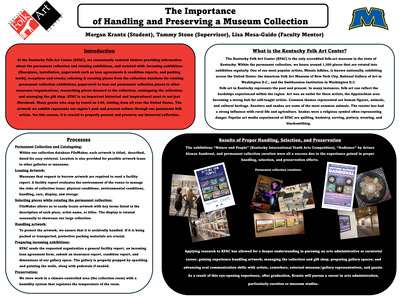
At the Kentucky Folk Art Center (KFAC), we consistently assisted visitors providing information about the permanent collection and rotating exhibitions, and assisted with: incoming exhibitions (floorplans, installation, paperwork such as loan agreements & condition reports, and packing work); receptions and events; selecting & curating pieces from the collection database for rotating permanent collection exhibitions; paperwork to loan out permanent collection pieces to other museums/organizations; researching pieces donated to the collection; cataloguing the collection; and managing the gift shop. KFAC is an important historical and inspirational asset to not just Morehead. Many guests who stop by travel on I-64, visiting from all over the United States. The artwork we exhibit represents our region’s past and present culture through our passionate folk artists. For this reason, it is crucial to properly present and preserve our historical collection.
-
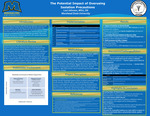
The Potential Impact of Overusing Isolation Precautions
Laci Johnson
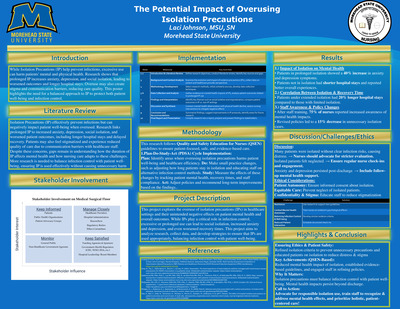
While Isolation Precautions (IP) help prevent infections, excessive use can harm patients' mental and physical health. Research shows that prolonged IP increases anxiety, depression, and social isolation, leading to worsened outcomes and longer hospital stays. Overuse may also create stigma and communication barriers, reducing care quality. This poster highlights the need for a balanced approach to IP to protect both patient well-being and infection control.
-
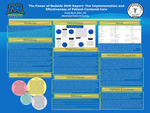
The Power of Bedside Shift Report: The Implementation and Effectiveness of Patient-Centered Care
Emily Byrd
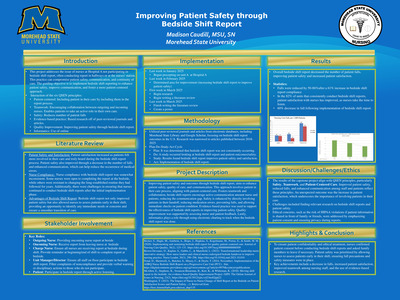
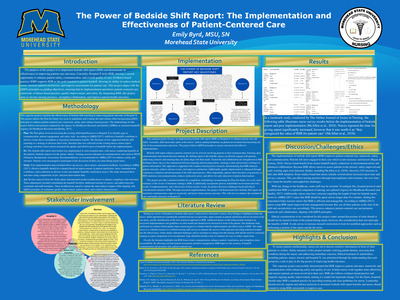
The purpose of this project is to implement bedside shift report (BSR) and demonstrate its effectiveness in improving patient care outcomes. Currently, Hospital X lacks BSR, missing a crucial opportunity to enhance patient safety, communication, and overall quality of care. Evidence-based practice (EBP) supports BSR as the gold standard in patient handoff, showing its ability to reduce medical errors, increase patient satisfaction, and improve assessments for patient care. This project aligns with the QSEN principles as guiding objectives, ensuring that its implementation prioritizes patient-centered care, teamwork, evidence-based practice, quality improvement, and safety. By integrating BSR, this project aims to elevate nursing practices, strengthen collaboration, and improve patient health outcomes.
-
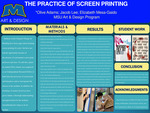
THE PRACTICE OF SCREEN PRINTING
Olive Adams, Jacob Lee, and Elizabeth Mesa-Gaido
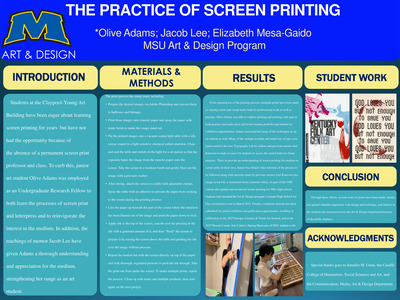
Students at the Claypool-Young Art Building have been eager about learning screen printing for years but have not had the opportunity because of the absence of a permanent screen print professor and class. To curb this, junior art student Olive Adams was employed as an Undergraduate Research Fellow to both learn the processes of screen print and letterpress and to reinvigorate the interest in the medium. In addition, the teachings of mentor Jacob Lee have given Adams a thorough understanding and appreciation for the medium, strengthening her range as an art student.
-
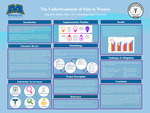
The Undertreatment of Pain in Women
Abigail R. Schultz
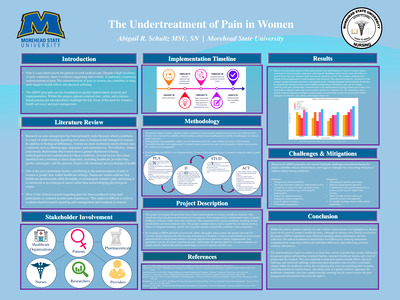
Pain is a prevalent reason for patients to seek medical care. Despite a high incidence of pain conditions, there is evidence suggesting that women, in particular, experience undertreatment of pain. The undertreatment of pain in women can contribute to long-term negative health effects and physical suffering. • The QSEN principles are the foundation to quality improvement research and implementation. Within this project, patient-centered care, safety, and evidence-based practice are incorporated to highlight the key focus of the need for women’s health advocacy and pain management
-
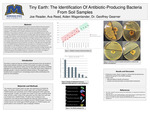
Tiny Earth: The Identification Of Antibiotic-Producing Bacteria From Soil Samples
Joe Reader, Ava Reed, Aiden Wagenlander, and Geoffrey Gearner
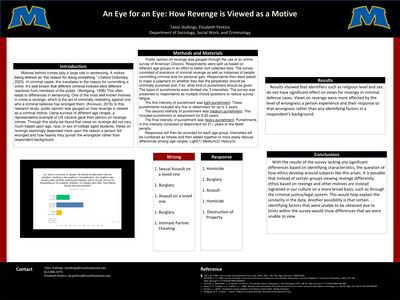
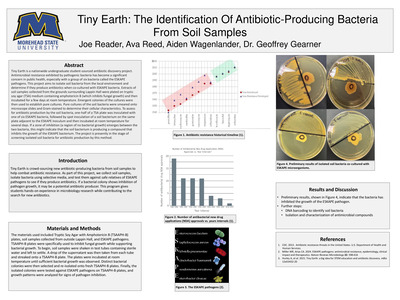
Tiny Earth is a nationwide undergraduate student-sourced antibiotic discovery project. Antimicrobial resistance exhibited by pathogenic bacteria has become a significant concern in public health, especially with a group of six bacteria called the ESKAPE pathogens. This project aims to isolate soil bacteria from the local environment and determine if they produce antibiotics when co-cultured with ESKAPE bacteria. Extracts of soil samples collected from the grounds surrounding Lappin Hall were plated on tryptic soy agar (TSA) medium containing amphotericin B (which inhibits fungal growth) and then incubated for a few days at room temperature. Emergent colonies of the cultures were then used to establish pure cultures. Pure cultures of the soil bacteria were smeared onto microscope slides and Gram-stained to determine their cellular characteristics. To assess for antibiotic production by the soil bacteria, one-half of a TSA plate was inoculated with one of six ESKAPE bacteria, followed by spot inoculation of a soil bacterium on the same plate adjacent to the ESKAPE inoculum and then incubated at room temperature for several days. If a zone of inhibition (a region of no bacterial growth) emerges between the two bacteria, this might indicate that the soil bacterium is producing a compound that inhibits the growth of the ESKAPE bacterium. The project is presently in the stage of screening isolated soil bacteria for antibiotic production by this method.
-
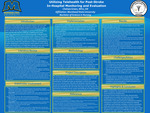
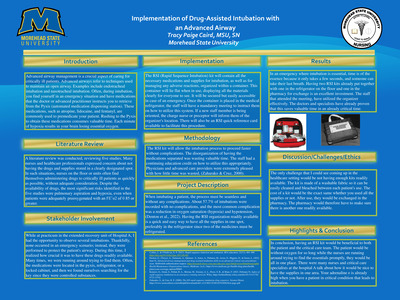
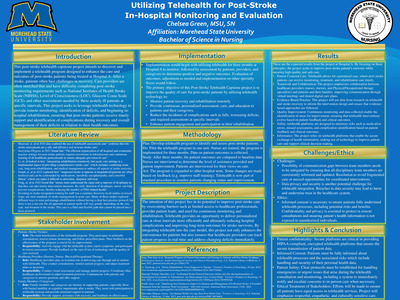
Utilizing Telehealth for Post-Stroke In-Hospital Monitoring and Evaluation
Chelsea Green
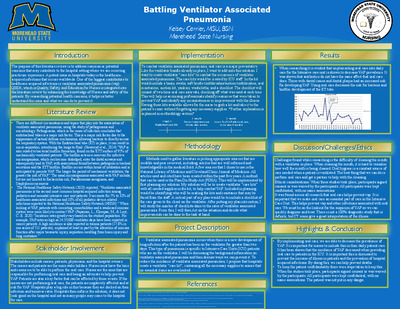
This post-stroke telehealth capstone project intends to discover and implement a telehealth program designed to enhance the care and outcomes of post-stroke patients being treated at Hospital A. After a stroke, patients often face challenges in recovery. Care providers are often stretched thin and have difficulty completing post-stroke monitoring requirements such as National Institutes of Health Stroke Scale (NIHSS), Level of Consciousness (LOC), Glascow Coma Scale (GCS), and other assessments needed by these acutely ill patients at specific intervals. This project seeks to leverage telehealth technology to provide remote monitoring, identification of deficits, and beginning in hospital rehabilitation, ensuring that post-stroke patients receive timely support and identification of complications during recovery and overall management of their deficits in relation to their health outcomes.
-
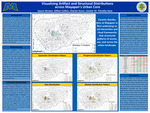
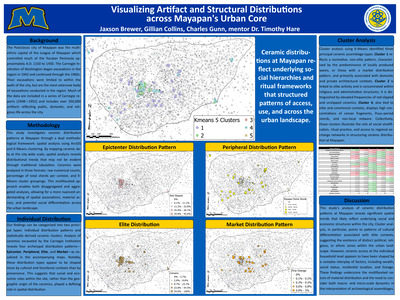
Visualizing Artifact and Structural Distributions across Mayapan's Urban Core
Jackson Brewer, Gillian Collins, Charles Gunn, and Timothy Hare
The Postclassic city of Mayapan was the multiethnic capital of the League of Mayapan which controlled much of the Yucatan Peninsula approximately A.D. 1150 to 1450. The Carnegie Institution of Washington began excavations in the region in 1942 and continued through the 1960s. Their excavations were limited to within the walls of the city, but are the most extensive body of excavations conducted in the region. Much of the data are included in a series of Carnegie reports (1948—1952) and includes over 350,000 artifacts reflecting public, domestic, and religious life across the city.